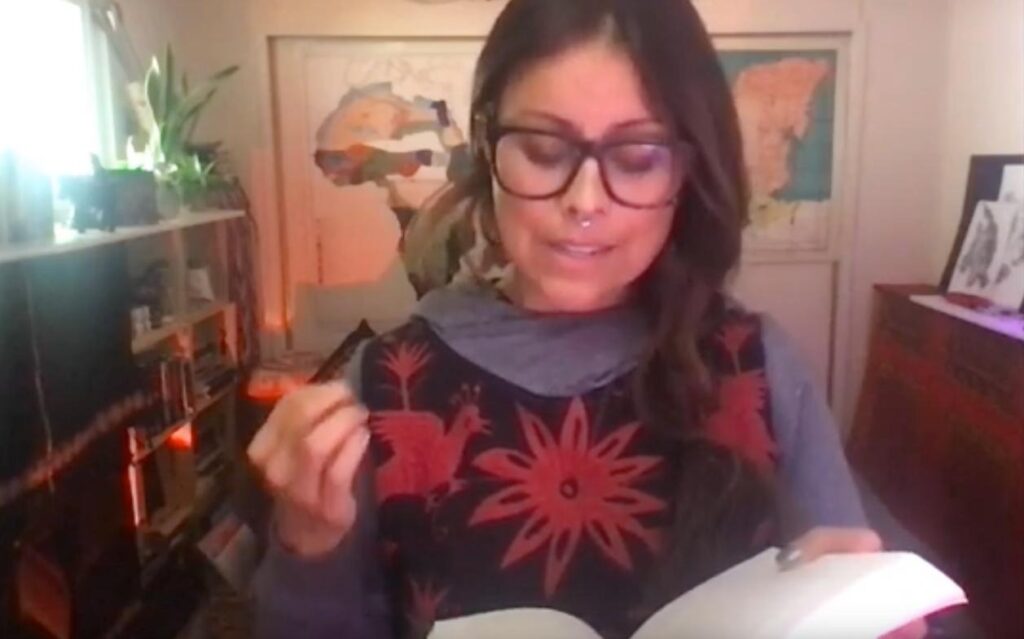
My name is Linda Quiquivix, oxib’ ajmaq, and I make art, love books, translate, and write while organizing intercommunally for a world where many worlds fit.
My task in community is to feel-think together about our liberation movements across struggles, calendars, ways, and geographies. Of great interest is preventing ourselves from becoming the monsters we fight. The question that guides my work is, How do we share the world by respecting all our differences?
I am daughter of an undocumented migrant community from Iximuleu, also known as Guatemala, born and raised with and by Occupied Chumash and Tongva lands.
I have a doctorate in Geography from the University of North Carolina at Chapel Hill. As a student of the Critical Cartography school, my research, The Political Mapping of Palestine, studied the modern history of Palestine’s maps and borders. I use the word “critical” to mean investigating the assumptions of any argument out loud, including maps, especially the unspoken assumptions.
At Duke University I took courses for a Certificate in Middle East Studies, where I studied the history of the Modern Middle East. During this time, I had the honor of visiting Syria, Lebanon, and Egypt, and living in and learning from Palestine, places that today are not the same as they were back then.
After graduating in 2012, I began a postdoctoral fellowship at Brown University in the Critical Global Humanities. There, I taught about Palestine, the Zapatistas, the Panthers, Marx, DuBois, and Fanon and I learned about Wynter, Hartman, Spillers, and encountered the afropessimists in a generative way.
In 2014 I left academia to place my training at the service of organized communities building autonomy from below and to the left, against capitalism and toward a world where many worlds fit.
My last name is pronounced kee-kee-veesh, a Maya-Mam name from Iximuleu, the Land of Maize, a geography today some call Guatemala, Southern Mexico, Belize, El Salvador, and Honduras.
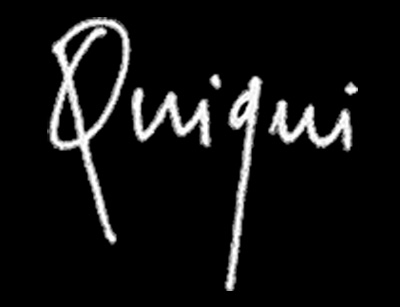
I often go by QuiQui, which to English speakers might look like it’s pronounced kwee-kwee. Sometimes I spell it Kiki. Arab compas tend to write it QiQi, all on their own, which I think I like most.
The word compa is a shortened version of the Spanish words compañera, compañero, and compañeroa. It has several uses in Spanish, including coworker and comrade. The way I use it doesn’t yet have a strong English equivalent. A compa to me describes someone who accompanies in communal struggle, side by side, from below and to the left.
May we one day call each other compa, or maybe we already do.